

Energy minister reaffirms plan to end diesel imports in 2026
Monday, December 29 2025 - 07:52 AM WIB
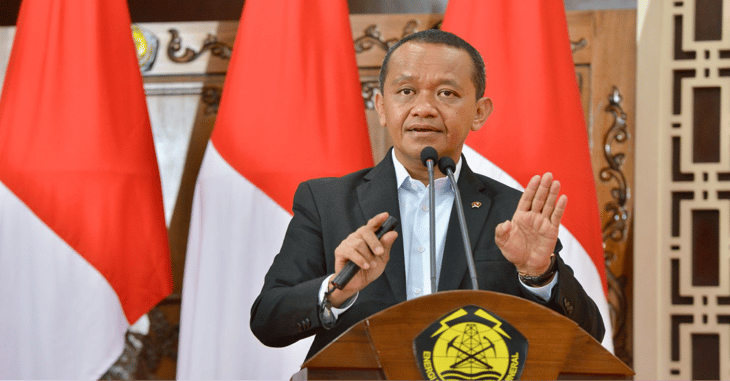
The government is pressing ahead with its plan to end diesel imports in 2026, banking on the start-up of the Balikpapan Refinery Development Master Plan (RDMP) and the expansion of the biodiesel mandate to achieve fuel self-sufficiency.
Minister of Energy and Mineral Resources (ESDM) Bahlil Lahadalia said Indonesia aims to stop importing diesel entirely next year, provided the upgraded Balikpapan refinery in East Kalimantan operates as planned.
“Our agenda for 2026 is no more diesel imports,” Bahlil said on Sunday (Dec. 28). “If the Balikpapan RDMP is fully operational, domestic diesel supply should be sufficient.”
Bahlil noted, however, that limited imports may still be required in the early months of 2026, depending on the refinery’s operational readiness. If full operations are only achieved around March, imports could still take place in January–February to safeguard national energy supply.
“But if we don’t need to import, then why import?” he said. “Imports will only be exercised if we are not fully ready.”
According to Bahlil, once the Balikpapan RDMP operates at full capacity, Indonesia could record a diesel surplus of around 3–4 million kiloliters (KL) in 2026. The refinery upgrade will increase crude processing capacity from 260,000 barrels per day (bpd) to 360,000 bpd and enable the production of Euro V–compliant fuels, including diesel, gasoline, jet fuel and LPG.
In addition to the RDMP, the government is banking on the implementation of the B50 biodiesel mandate starting in 2026. The combination of higher refinery output and increased biodiesel blending could potentially create an oversupply of diesel, opening the door for exports in the future, Bahlil said.
The minister previously reported to President Prabowo Subianto that Indonesia would no longer import diesel from 2026 onward, citing the strategic role of the Balikpapan RDMP in strengthening domestic fuel supply.
Read also : Pertamina launches Euro V ultra-low sulfur diesel
However, the project’s inauguration has been delayed from its original December 2025 schedule due to ongoing system checks and synchronization, according to the Ministry of Energy and Mineral Resources. Deputy Minister Yuliot Tanjung said inspections are still underway to ensure safe and stable operations, while the final inauguration date will depend on the president’s schedule.
Policy details are also being finalized. The Ministry of Energy and Mineral Resources has indicated that the ban on diesel imports by private fuel retailers will take effect from April 2026. From that point onward, all diesel demand — including that of private gas station operators — must be supplied from domestic refineries or through state-owned energy company PT Pertamina.
Yuliot said Indonesia’s total refinery capacity currently stands at around 1.18 million bpd, while national fuel demand is about 1.6 million bpd, with the gap historically met through imports. With the Balikpapan RDMP coming online, refinery production can be adjusted to meet domestic needs, particularly for diesel and aviation fuel.
Pertamina, through its refining arm PT Kilang Pertamina Internasional (KPI), has expressed readiness to support the policy. Acting Corporate Secretary Milla Suciyani said Pertamina is prepared to align diesel production with national demand.
Nevertheless, the planned import halt has raised concerns among private fuel retailers. Hadi Ismoyo, president director of PT Petrogas Jatim Utama Cendana, warned that the policy could narrow the operating space for private downstream players and create a perception of single-source fuel supply through Pertamina.
“Capacity may be sufficient quantitatively, but that does not necessarily mean product specifications and quality will match the needs of private retailers,” Hadi said, as quoted by Kontan.co.id.
As of mid-2025, Indonesia still imported about 10.6% of its diesel needs and more than 60% of its gasoline consumption. While diesel imports may be phased out, Bahlil has previously acknowledged that gasoline imports are likely to continue in the near term.
Editing by Reiner Simanjuntak