

Indonesia appoints Danantara to lead 3.4 GW electricity exports to Singapore
Monday, July 6 2026 - 07:54 PM WIB
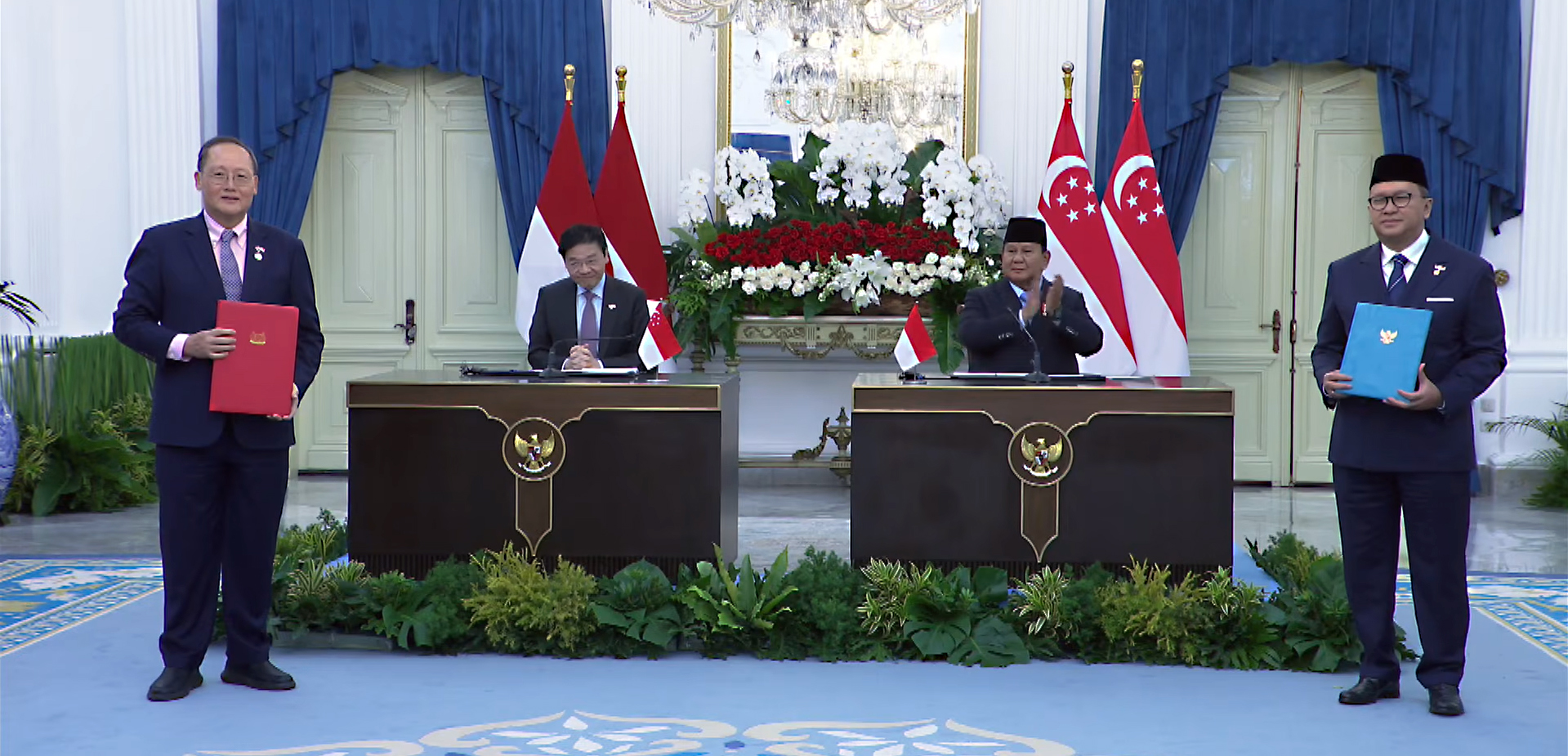
Indonesia has appointed sovereign wealth fund Danantara to lead the implementation of cross-border electricity exports to Singapore, as the two countries signed a series of agreements on Monday aimed at accelerating the development of at least 3.4 GW of low-carbon power exports by 2035.
President Prabowo Subianto announced the appointment during the annual Indonesia-Singapore Leaders' Retreat in Jakarta, where he met Singapore Prime Minister Lawrence Wong and the two sides concluded 26 government-to-government and business-to-business agreements.
"Indonesia has assigned Danantara Investment Management Agency to implement the cross-border electricity trade cooperation. The agency is also entrusted with handling future trade activities," Prabowo said during a joint statement with Wong.
The electricity trade initiative was first agreed during the 2025 Leaders' Retreat and forms part of Singapore's plan to import 6 GW of low-carbon electricity by 2035, with Indonesia expected to supply at least 3.4 GW.
To advance the project, Danantara's investment arm signed memoranda of understanding (MoUs) with Singapore's Keppel Electric and Sembcorp Utilities to explore the offtake of imported low-carbon electricity. It also signed an MoU with Singapore Energy Interconnections (SGEI), the government-appointed company overseeing cross-border interconnection development, to cooperate on commercial and technical aspects of the transmission link.
Separately, Danantara and Singapore's Ministry of Trade and Industry signed a roadmap to guide negotiations and implementation of the cross-border electricity trade project.
"The MoUs will provide a clear roadmap for negotiations and discussions between the parties, paving the way for our cross-border electricity project. We believe such a project is a win-win for both countries," Wong said.
He described the initiative as an important building block for the ASEAN Power Grid, the regional plan to interconnect electricity networks across Southeast Asia.
The two governments also reaffirmed their commitment to develop the regulatory frameworks, investment conditions and policies needed to support cross-border electricity trade, including a framework for cross-border Renewable Energy Certificates (RECs) aligned with international standards before electricity exports begin.
Singapore's Minister-in-charge of Energy and Science & Technology, Tan See Leng, said several Indonesian electricity export projects had made good progress and could begin operations before the end of the decade if the remaining regulatory and technical hurdles are resolved.
Danantara Chief Executive Officer Rosan Perkasa Roeslani said Indonesia was committed to completing the necessary regulatory and infrastructure preparations while emphasizing that the projects would be supported by new renewable generating capacity rather than diverting electricity from domestic supply.
"This is new, additional generation capacity—distinct from our domestic supply. At its core, this is a catalyst for Indonesia's domestic green industrialisation," Rosan said in a joint statement.
One of the projects moving forward is a US$210 million solar development in the Morowali industrial park in Central Sulawesi, where Sembcorp is partnering with Indonesia's SESNA and sovereign wealth fund INA to build a 200-megawatt solar photovoltaic plant integrated with an 80-megawatt-hour battery energy storage system.
Wong said the project demonstrated Indonesia's "tremendous potential in renewable energy," which Singapore could help unlock through long-term electricity imports.
Despite the progress, key commercial issues remain unresolved. Energy Minister Bahlil Lahadalia told reporters after the summit that Indonesia and Singapore were still negotiating electricity pricing.
He said Indonesia is seeking a "win-win" pricing arrangement before the first exports of green electricity can commence.
Coordinating Minister for Economic Affairs Airlangga Hartarto said earlier that implementation of the project is expected to begin within the next one to one-and-a-half years, subject to completion of the required cross-border transmission infrastructure and ongoing technical reviews.
Editing by Reiner Simanjuntak