

Indonesia’s May crude price drops on easing Middle East tensions
Monday, June 8 2026 - 07:11 AM WIB
By Romel S. Gurky
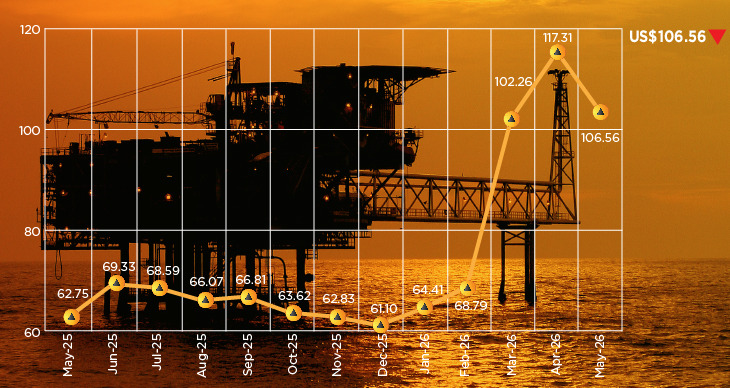
Indonesia’s average crude oil price (ICP) fell to $106.56 per barrel in May 2026, down $10.75 from $117.31 per barrel in April, as easing geopolitical tensions in the Middle East and weaker global demand prospects weighed on international oil prices.
The Ministry of Energy and Mineral Resources (ESDM) said the decline mirrored a drop in major global crude benchmarks, particularly Dated Brent, amid signs of improving global oil supply conditions.
“The average ICP for May 2026 was set at $106.56 per barrel, in line with the decline in major global crude oil prices. This positive development was generally influenced by improved global supply conditions as geopolitical conflicts eased,” Director General of Oil and Gas Laode Sulaeman said in a statement on Friday.
Laode said global oil markets responded throughout May to indications of de-escalating tensions involving the United States, Israel and Iran. U.S. President Donald Trump repeatedly signaled the possibility of ending the conflict and progress in negotiations with Iran, while Washington canceled plans for additional military strikes against Iran and reinstated temporary sanctions waivers for Russian oil already in transit.
“These developments reduced market concerns over potential disruptions to global oil supplies and put downward pressure on crude oil prices in international markets,” he said.
Read also : Prabowo sets higher 2027 ICP outlook, trims gas lifting target
The ICP had surged to $117.31 per barrel in April, its highest level in months, after escalating geopolitical tensions in the Middle East raised concerns over supply disruptions, particularly around the Strait of Hormuz.
In addition to geopolitical factors, weaker global demand expectations also contributed to the decline in oil prices in May.
According to the International Energy Agency (IEA), global oil demand is projected to decline by 420,000 barrels per day to around 104 million bpd, with the sharpest contraction expected in the second quarter of 2026 when demand could fall by 2.45 million bpd.
Oil imports across Asia also weakened between February and April, with lower purchases recorded by China, Japan, South Korea and India. China’s crude oil throughput fell 5.8% year-on-year to 13.35 million bpd, the lowest level in nearly four years, according to the ministry.
Laode said the government would continue monitoring developments in global energy markets and their potential impact on domestic energy prices and supply security.
“Through continuous monitoring and the implementation of necessary anticipatory measures, the government remains committed to maintaining national energy security and ensuring the availability of energy supplies for the public,” he said.
Editing by Reiner Simanjuntak