

Indonesia to adjust coal, nickel production quotas based on market demand
Monday, June 8 2026 - 05:07 PM WIB
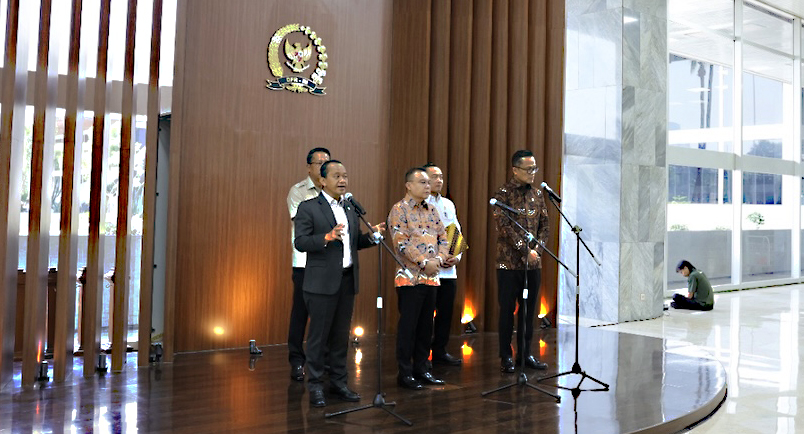
Indonesia will adopt a more flexible approach to coal and nickel production quotas, allowing output to be adjusted in line with commodity prices and domestic processing requirements, Energy and Mineral Resources Minister Bahlil Lahadalia said on Monday.
For coal, Bahlil said the government is preparing a measured relaxation policy that would allow higher production when prices are favorable and tighter supply controls when market conditions weaken.
"If prices are strong, we will increase production. If prices begin to plateau, we will also introduce policies to maintain the balance between supply and demand," Bahlil told reporters at the House of Representatives complex in Jakarta.
The government previously reduced coal production volumes in the 2026 Work Plan and Budget (RKAB) to around 600 million tonnes.
Bahlil said the policy aims to support coal prices while maximizing state revenue and foreign exchange earnings.
Read also: Coal, nickel miners eye higher output in H2 after quota cuts
In the nickel sector, Bahlil indicated the government may revise production quotas to ensure sufficient ore supply for domestic smelters, following concerns from industry players over plans to limit output to around 250 million to 260 million wet metric tonnes (wmt) this year.
He said the Energy Ministry would align mining quotas with the raw material requirements of nickel processing facilities to maintain industrial operations and support downstream investment.
"The government's responsibility is to ensure that all raw materials sourced from our country are available. Production capacity, industrial demand and the RKAB that we approve must be balanced so that industry can continue operating," Bahlil said.
Industry groups have warned that nickel ore demand could reach around 350 million wmt in 2026, comprising 220 million to 240 million tonnes of saprolite ore and about 120 million tonnes of limonite ore, driven by existing and newly commissioned smelters.
Mining executives have argued that excessive restrictions on ore production could disrupt supply chains, reduce smelter utilization rates and affect employment across Indonesia's nickel industry.
Editing by Alexander Ginting