

Welcome 2026: Dig less, pay more
Thursday, January 1 2026 - 01:51 PM WIB
By Adianto P. Simamora
Key takeaways:
• Cutting production: The government plans to reduce the amount of coal and nickel that companies can extract to make prices go higher.
• Strict pricing: A new regulation (Permendag 46/2025) changes how the government calculates the value of mining products for tax purposes.
• New export tax: Coal companies might have to pay an extra 1% to 5% tax when selling overseas.
• Foreign exchange rules: Exporters must keep 100% of their earnings in Indonesian state banks for at least one year.
As 2025 ends, Indonesia's mining industry is entering a tougher phase. Global prices for coal and nickel have fallen, yet the government is tightening control over how much companies can export, how much they must pay the state, and how strictly they must comply with regulations.
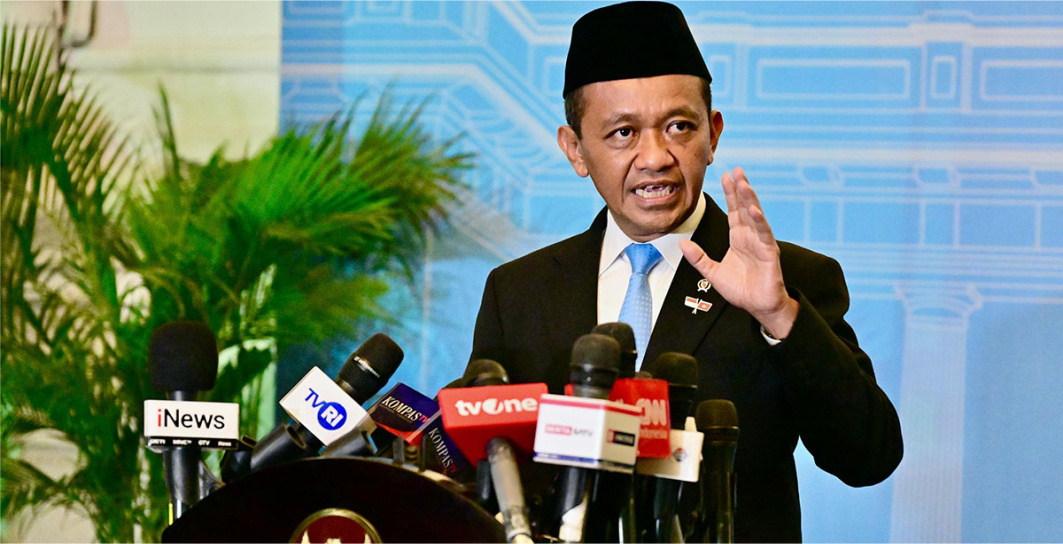
Minister of Energy and Mineral Resources Bahlil Lahadalia has confirmed plans to reduce coal and nickel production in 2026, saying, "We are cutting everything,” to stabilize prices. Speaking to reporters on December 19, 2025, Bahlil explained the rationale—Indonesia's coal capacity of 500-600 million tons annually pressures global supply (1.3 billion tons total), dragging prices down. By curbing output, the ministry aims to deliver "good prices" for businesses while securing robust state royalties.
For nickel, the Indonesian Nickel Miners Association (APNI) reports proposed 2026 RKAB nickel ore production quotas at 250 million tons, down sharply from 379 million in 2025. APNI noted this could tighten supply, spurring imports by smelters and lifting prices: saprolite to US$25/ton, and limonite to US$30-40. A pending Mineral Benchmark Price/HPM formula revision will further bolster domestic ore values.
That sounds like support for miners—less supply could mean higher prices—but it also means tighter government control over who gets to produce, how much, and at what cost.
Permendag 46/2025: Precision in pricing
Issued on December 17, 2025, by Minister of Trade Budi Santoso, Regulation No. 46 replaces Permendag 8/2023 (as amended by No. 10/2025). It distinguishes HPE/Export Reference Price—for Finance Ministry export valuation—from HR/Reference Price—for export duties—both set periodically by the Trade Ministry after Ministry of Energy and Mineral Resources (ESDM) coordination. Previously, pricing often used the highest averages from multiple sources, inflating tax bases and sparking disputes. Now, calculations rely on averages of international prices, FOB values, domestic markets, importer-country rates, HMA/Mineral Reference Price (metals), or HBA/Coal Reference Price (coal). Factors include domestic needs, resource sustainability, price stability, downstreaming, global trends, and competitiveness.
ESDM submits proposals five days before expiry; discussions follow with stakeholders. Absent input, Trade decides unilaterally, with prior prices holding otherwise. Changes are possible via similar processes. This "data-driven" shift ends negotiation loopholes: delays mean automatic government pricing, ensuring export flows and tax continuity.
Finance Minister Purbaya Yudhi Sadewa said on December 9, 2025, the government aims to begin collecting a coal export duty in 2026, with rates ranging from 1% to 5% depending on coal calorific value. He confirmed the duty will apply even though benchmark coal prices (HBA) are expected to fall to US$95–100 per ton next year, from an average US$111 per ton in 2025. "Why? Because we subsidize them," Purbaya told reporters.
He argued that coal companies benefit from the Job Creation Law change reclassifying coal as a taxable good, enabling massive VAT refunds.
According to Purbaya, these refunds reach around Rp 25 trillion annually, turning state tax receipts negative amid alleged cost inflation practices.
"Instead of positive net income from the coal industry, it becomes negative. It's as if the government subsidizes a very profitable sector," he said. The new duty aims to restore revenue—potentially Rp 20 trillion in 2026. "These are wealthy companies with large export profits—yet we end up subsidizing them indirectly."
The shift sounds technical, but the effect is very real. Real-world math: At US$100/ton coal with 5% duty, that's US$5/ton. For US$50/ton low-grade at 2%, it's US$1—multiplied across billions of tons, it bites amid falling sales prices.
The squeeze tightens
At the same time, exporters must now keep all their foreign exchange earnings—100% of their US dollars—in state-owned banks for at least one year. They cannot move the money overseas or into smaller private banks. This change is part of the revised DHE SDA (export earnings from natural resources) policy that begins fully on January 1, 2026. The goal is to make sure Indonesia's foreign exchange reserves grow, which helps stabilize the economy. But for mining companies, this limits their flexibility in using their own money.
These policy changes may look fair and even smart from the government's side. But on the ground, they are causing anxiety. Many miners still don't know if they will get approval for their 2026 Work Plans and Budgets (RKAB) with targeted volume as proposed. Without that approval, they cannot legally produce anything next year. Previously, the RKAB was approved for three years, but now it's typically back to one year—meaning more frequent reviews and more uncertainty.
It is still fresh in the industry’s mind how, in 2025, the government suspended over 190 mining companies for failing to follow reclamation rules. That move sent a strong message: compliance is now non-negotiable. If companies break even small rules, their licenses can be revoked. And with the new regulation, delays in submitting pricing data could also trigger automatic government pricing decisions—removing any room for negotiation or delay.
For companies, this means they must upgrade their internal systems to calculate expected tax rates in real time. Any mismatch between their own price estimates and the government's HPE could lead to accusations of underpayment, triggering audits, penalties, or even suspension—just like in the reclamation crackdown.
Industry voices are sounding the alarm. Ardhi Ishak from the Association of Indonesian Mining Professionals (Perhapi) noted in his LinkedIn post that every end of the year brings worry for the mining sector. He recalled the sudden 2022 coal export ban and the surprise revision of the Mining Law in early 2025. Now, the new regulation adds further pressure by requiring exact calculations of export prices that will be used to impose export duties.
Thus, starting in 2026, survival in Indonesia's mining sector will depend not just on how much you can dig—but on how well you comply. One mistake, and your operations may stop. One missed deadline, and your export price may be set without your input.
If nothing changes, Indonesia's mining sector will become a two-speed system: a few large companies with strong compliance teams and digital tools will thrive, while smaller players will struggle or shut down. The focus is shifting from production to permission—from what you extract, to how precisely you follow the rules. Unless the government offers clear guidance and some breathing room during this transition, the so-called "precision trap" could trap not just bad actors, but many good ones too.
Editing by Reiner Simanjuntak